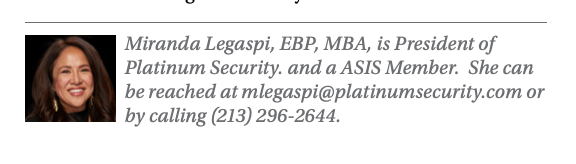
By Miranda Legaspi, EBP, MBA
This article first appeared in the CAI Coachella Valley HOA Living Magazine, October 2025 Issue.
THE ART OF DE-ESCALATING TENSIONS WITH CIVILITY
In a world where discord and strife are part of everyday life, the ability to de-escalate tensions has never been more important. It goes beyond mere politeness; civility serves as a crucial instrument for fostering understanding, empathy, and effective communication. Especially in today’s climate— where differing ideals so often lead to confrontation—it is vital to exercise civility when differences of opinion and ideas arise.
UNDERSTANDING CIVILITY
Civility transcends superficial etiquette. It encompasses respect, consideration, and a genuine concern for the well-being of others. When approaching conflicts with a civil mindset, the primary objective is to comprehend rather than to prevail. This sets the stage for constructive discourse and mutually beneficial resolutions.
THE PIVOTAL ROLE OF EMPATHY
Empathy stands as the cornerstone of civility. By placing ourselves in the shoes of others, we gain a deeper understanding of their perspectives and emotions. While agreement may not always be possible, this empathetic approach enables us to navigate situations with compassion and respect.
PRACTICAL STRATEGIES FOR DE-ESCALATION
- Maintain Composure: Emotions can escalate conflicts at rapid speed. Preserving a calm demeanor Helps prevent situations from spiraling out of control.
- Listen Attentively: Demonstrate genuine interest in understanding the other person’s point of view. This can diffuse anger and pave the way for resolution.
- Use Neutral Language: Avoid inflammatory or accusatory rhetoric. Instead, choose words that are neutral and objective.
- Give Them the Floor: Allow the other person to share their opinion without interruption.
- Acknowledge Emotions: Provide a safe space for feelings to be expressed. Validate emotions even if you disagree—this fosters a sense of being heard, seen, and respected.
- Seek Common Ground: Concentrate on shared goals or values. If none are apparent at first, take a step back and look again. Finding even a small point of agreement can help bridge communication breakdowns.
THE IMPORTANCE OF BODY LANGUAGE
Body language plays a significant role in de-escalation. For example, crossing your arms can signal that you are not open to feedback. Non-verbal cues such as maintaining eye contact, nodding, and adopting an open posture convey attentiveness and respect. These subtle signals reinforce the spoken message of understanding and can help calm heightened emotions.
THE SIGNIFICANCE OF CIVILITY
Civility in de-escalation is indispensable because it creates a safe environment for dialogue. It encourages cooperation over competition and cultivates a sense of community. In professional settings, it leads to more productive teamwork and problem-solving. In personal relationships, it strengthens trust and understanding.
THE BROADER IMPACT OF CIVILITY
When civility becomes a common practice, its influence ripples across all areas of life. Communities where people engage civilly tend to be more cohesive and supportive. In workplaces, this translates into stronger collaboration and morale. On a societal level, civility paves the way for more respectful and productive public discourse—even on contentious issues.
CONCLUSION
Simply put, this is not the world we grew up in. We need to return to a time when civility was the norm in discourse and differences in opinion were respected and welcomed.
Incorporating civility into de-escalation practices is not merely about resolving conflicts; it is about building a more empathetic and respectful society. By approaching disagreements with a civil mindset, we pave the way for constructive and lasting resolutions.
The art of de-escalating tensions with civility is about building bridges rather than walls. It is about understanding rather than confronting, listening rather than arguing, and finding common ground rather than deepening divides. In a world fraught with discord, mastering this art is not just beneficial—it is essential for creating a more harmonious and understanding community.