By Matthew Gardner, Esq., CCAL, CAI Greater Inland Empire Chapter Liaison
This article first appeared in the CAI Channel Islands Chapter’s Channel of Communications Magazine.

With the recent passage of SB 770 (removing insurance requirements for Owners with EV charging stations), associations are reminded that Sacramento often has as much, if not more, to say about property restrictions than the community’s own governing documents. This would be a good time for boards to revisit their CC&Rs, Rules and Regulations, Architectural Standards, and other governing documents to ensure that they are consistent with California requirements for Solar Panels, Electric Vehicles, ADUs, and other acceptable property use in our communities.
Electric Vehicles and Charging Stations
As the number of electric vehicles used continues to rise, associations will have to begin to plan for accommodating charging stations. While this issue will primarily burden condominium associations where owners and associations share common area parking and utilities, all associations should be prepared to address the impact of EV Charging Stations in communities.
Civil Code 4745 prohibits governing documents from banning EV Charging Stations or from unreasonably restricting them if the owner is seeking to install the device in their owned or assigned parking space. For the purpose of the statute, an “unreasonable” restriction is one that significantly increases the cost or decreases its effectiveness.
The statute does place some significant requirements upon the requesting owner. The owner must use a licensed contractor to install the charging station, pay for the costs of its installation as well as the ongoing electricity usage. However, now that SB 770 has passed, associations can no longer require owners to name the association as additional insured. Associations can still request that owners sign agreements about electricity usage and a commitment to ongoing maintenance of the charging station.
If installation in the owner’s garage or assigned space is impossible or unreasonably expensive, the association must allow the charging station to be installed in another common area parking space per (Section 4745(g)), which might involve a space reassignment. The statute also allows associations to create a shared charging station space for the benefit of all residents. This could require some metering to make sure users are paying for the electricity used.
Boards should consider adopting policies to inform owners of the expected requirements in advance of the application.
That will reduce the confusion and frustration that might occur in an owner’s planning process. A written agreement should also be signed to protect both the owner and association, documenting the owner’s permission as well as the conditions of that to make sure that owners of these systems do not pose any risk to neighboring property or owners, whether in planned developments or in condominium associations.
Solar Panels
California also rushed to encourage owners to install solar panels as a source of alternative energy production. California Legislature proposed changes to Civil Code Sections 714, 714.1, and 7546 to provide support at the state level for solar panels. By tackling the issue at the state level, it reduced some of the authority that boards had in limiting or overseeing where panels would be installed.
The law prohibits “unreasonable” restrictions against solar installations. That means that associations cannot create financial obstacles or aesthetic reasons to prevent owners who want to install solar panels. However, owners should be expected to maintain and insure their solar panels and can be asked to be responsible for any damage caused by installation or misuse. In planned developments, owners would have free reign over how and where they install solar panels on their own property.
If the request to install solar panels involves owners in a condominium community, the roof is most likely common area. By installing solar panels on the roof, owners are not just pursuing an architectural change to their own property, they are seeking to change common area. Civil Code Section 4746(b)b)(1) opens the opportunity for an owner to pay for and submit a “solar site survey” which showing a proposed fair allocation of the usable portion of the shared roof. That allows the boards to ensure that the solar panels are not interfering with association maintenance or other owners’ rights in the common area.
Boards should once again consider recording a maintenance agreement with the owner to ensure that those responsibilities transfer to new owners.
ADUs
Over the last few years, California has made it clear that it wants to promote housing, both through encouraging building and by reducing barriers to occupation. The first target was eliminating association authority to prohibit ADUs. As a result, communities must be prepared to address questions from their owners about what type of building should be permitted, and what reasonable requirements associations can ask those new buildings to meet. For now, issues surrounding ADUs and JADUs remain focused in the planned development communities, rather than those structured as condominium communities.
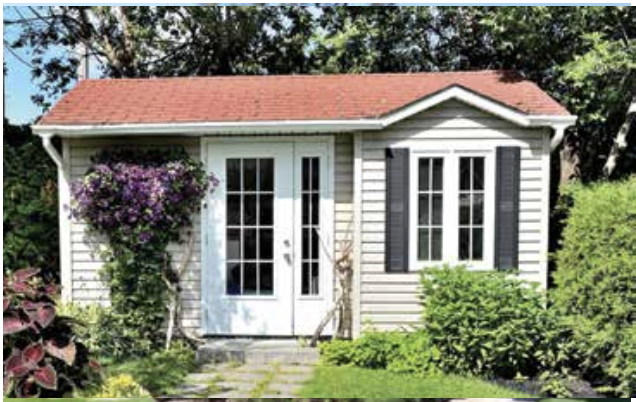
Civil Code Section 4751 removes the ability of CC&Rs to prohibit ADU or JADU construction in property zoned for single family use. While it can apply reasonable restrictions on appearances, associations are no longer able to intervene to prevent construction or use the CC&Rs to penalize owners for building/maintaining ADU structures. Those communities who meet the zoning requirements should connect with their local municipal or county zoning and building departments to confirm that their CC&Rs allow them to remain involved in the oversight process.
Assembly Bill 1033 amended Government Code Section 65852.2 dealing with the municipal approval of ADUs. The bill authorized local jurisdictions to permit owners to convert their ADU into a separate interest, basically turning homes with ADU properties into miniature condominium associations. This would allow both the principal residence and the ADU(s) on the property to be sold to buyers. The language in this bill made it clear that it intended to extend this right to owners in planned developments.
AB 3057 expanded the definition given to structures that are exempt from the California Air Quality Act (CEQA). CEQA has authority to review and approve structures that would require an environmental impact report. Currently, it reviews structures that act as the primary residence on a parcel zoned for a single-family residence. This law allows CEQA to expand the exemption to include the creation of junior accessory dwelling units (“JADUs”) in single-family residential zones.
Together, these laws are pointed at reducing the ability of both communities and surrounding cities from overly restricting additional construction on properties.
Boards do not want to be caught by surprise from owners who are requesting permission for ADUs and JADUs.
Getting ahead of this issue means working with city/county and state requirements to ensure that communities do not miss opportunities to limit the scope and impact of additional buildings.
Turf Removal
Continuing California’s reputation for environmental conservation, communities are expected to start re-focusing their landscaping away from water intensive varieties. In addition to Civil Code Sections 4735 and 4736, which prevented associations from enforcing water-intensive landscaping requirements during a drought, California is moving forward with other attempts to reduce water use throughout our communities. Beginning January 1, 2029, associations must be in compliance with requirements water use with respect to “functional turf.”

Water Code Section 10608.14 requires all associations with “non-functional turf” to remove or provide non-potable water to irrigate turf by the beginning of 2029. “Turf,” per the California Code of Regulations, means mowed grass, and “functional turf” means mowed grass in a recreational use area or community space. Larger associations with areas of decorative grass should not wait until the last minute to evaluate their landscaping irrigation situation.
Fortunately, the term “Nonfunctional turf” is not as encompassing as it otherwise might sound. Turf that is enclosed by fencing or other barriers to permanently prevent access for recreation or use is not functional turf. Essentially, “nonfunctional” turf is the area which is enclosed and inaccessible to use by residents. In addition to being solely decorative, the area of the turf must also be inaccessible to any recreational use. Even if owners do not regularly use or recreate on community turf, those areas may continue to be considered functional turf. As a result, it is unlikely that most communities will see significant impact of this requirement. However, even though the statute may not apply to most associations, there is one requirement which may apply to larger associations. Under Water Code Section 10608.14(e), commercial, industrial, or institutional properties with over 5,000 square feet of irrigated common area must provide a certification of compliance to the State Water Board every three years.
Those larger associations with turf that meet or exceed the irrigated square footage will want to examine whether they are subject to reporting and reduction requirements.
While the language appears to avoid residential communities, your community should attempt to confirm their status to avoid any potential penalties. Some communities will find that none of these California requirements impact their current budget or group of owners. However, proactive boards may see some of these items as future challenges that can position their community to not only be in compliance but ahead of the curve.